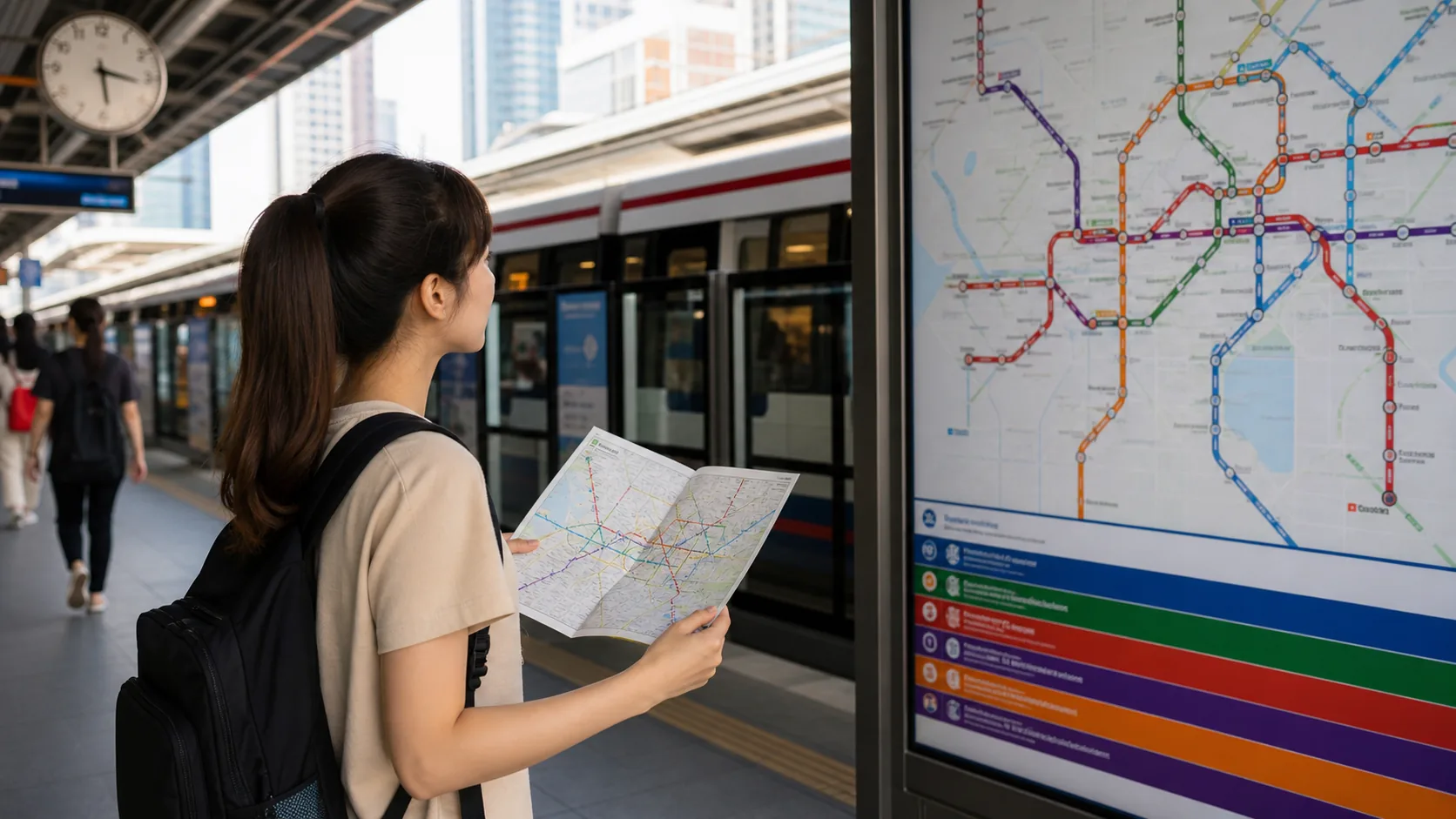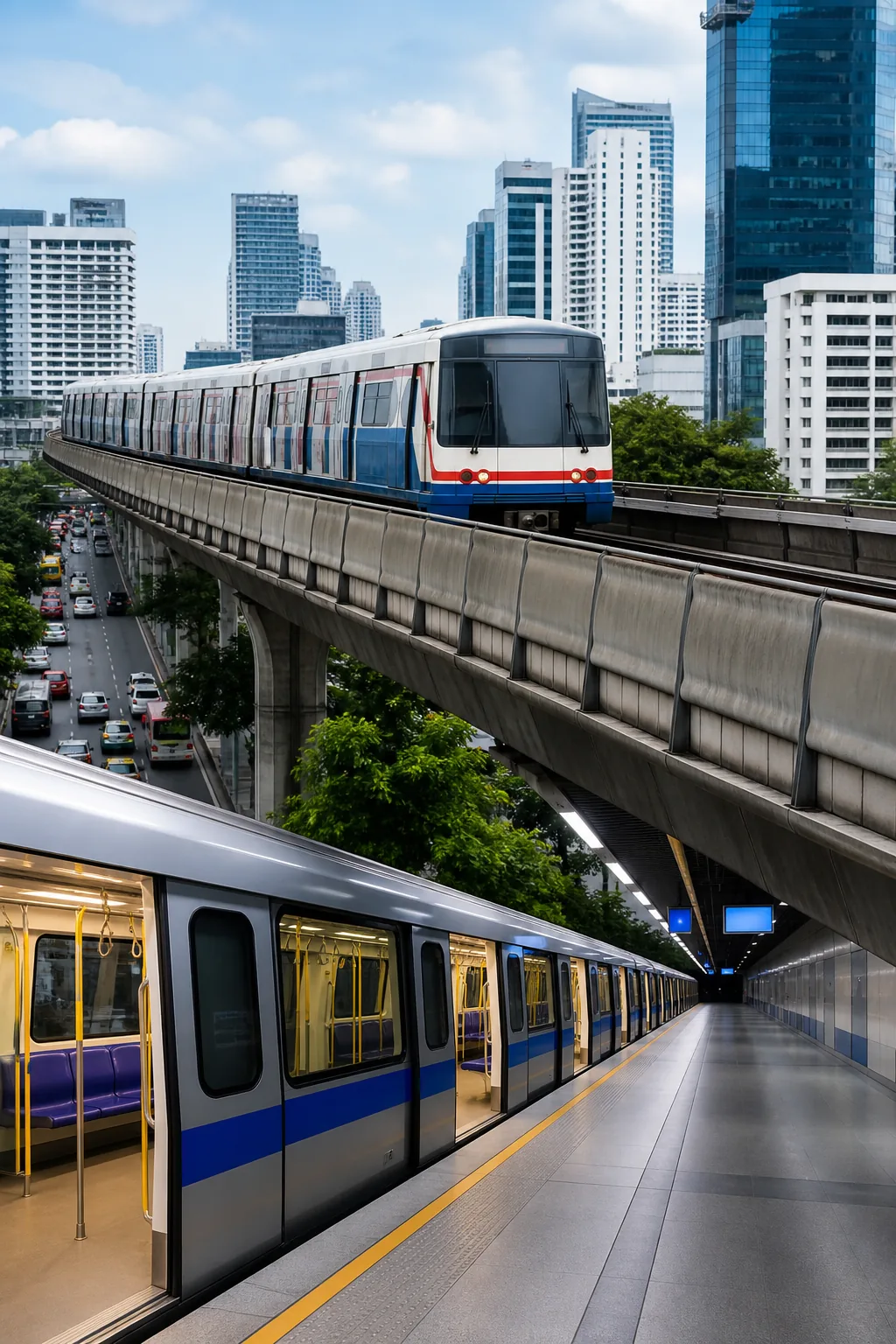
BTS and MRT are useful for many Bangkok journeys, but they are different rail networks and neither puts every destination at a station door. A first ride becomes manageable when you settle five questions in order: which network serves both ends, which station and direction you need, how to obtain that network's current ticket, how its entry and exit gates work, and how to reach the final address.
Find the actual start and destination stations
Check the hotel entrance and the attraction entrance, not just the neighborhood names. On the official BTS route map or BEM's MRT map, mark the departure station, destination station, line direction, and any interchange. If the journey crosses between BTS and MRT, confirm the current interchange and ticket rules for each operator before leaving; do not assume a ticket bought for one system covers the other.
Also check the street-level walk at both ends. The Bangkok first-timer guide helps group nearby stops so you are not crossing the city repeatedly just because a rail line appears on a map.
Buy the ticket for the network you are using
For a BTS single journey, the operator's ticket-machine instructions show a destination-selection, payment, and ticket-collection sequence. Its automatic-gate guide shows one ticket per passenger and how to present the ticket at entry and exit. Use the current signs or ask staff if your station or ticket type differs from the illustrated process.
For the MRT Blue or Purple Line, BEM's issuing-ticket guide describes selecting a destination at a vending machine or telling ticket-office staff the destination, then obtaining a single-journey token. Follow BEM's gate instructions for that token. These are operator-specific examples, not a claim that one payment method, price, or operating schedule applies to every Bangkok rail line.
Rehearse a simple BTS ride: Asok to Siam
As a planning example, locate Asok and Siam on the current BTS map before leaving. At Asok, choose Siam as the destination on the current ticket machine or ask station staff; obtain the ticket, follow platform signage for the direction shown on the map, and use the ticket at the entry gate. At Siam, follow exit signage, complete the gate process for your ticket, and only then choose the exit that best serves the street address. This example teaches the sequence; it does not guarantee a particular exit, fare, or service pattern on your travel date.
If the station name, direction, or interchange on site differs from your saved route, pause at the station map or ask staff rather than continuing on an assumed platform.
Count the first and last legs
Heat, rain, luggage, stairs, and long passages can make the walk to or from a station the hardest part. Check whether a short taxi, boat, or ride-app leg would make the whole journey simpler. For a point-to-point alternative, see the Grab guide. Rail is a tool for the corridor it serves, not a rule that every Bangkok day must be rail-only.
Keep airport rail and a fallback separate
Airport Rail Link is an airport-arrival decision, not the same as a BTS or MRT city ticket. The Suvarnabhumi Airport transportation page lists the current airport choices; the airport-to-city guide helps compare the complete hotel transfer. Keep the destination name and hotel address available offline. If a gate rejects a ticket, a connection is unclear, or a route changes, ask station staff and recheck the operator map before switching modes.