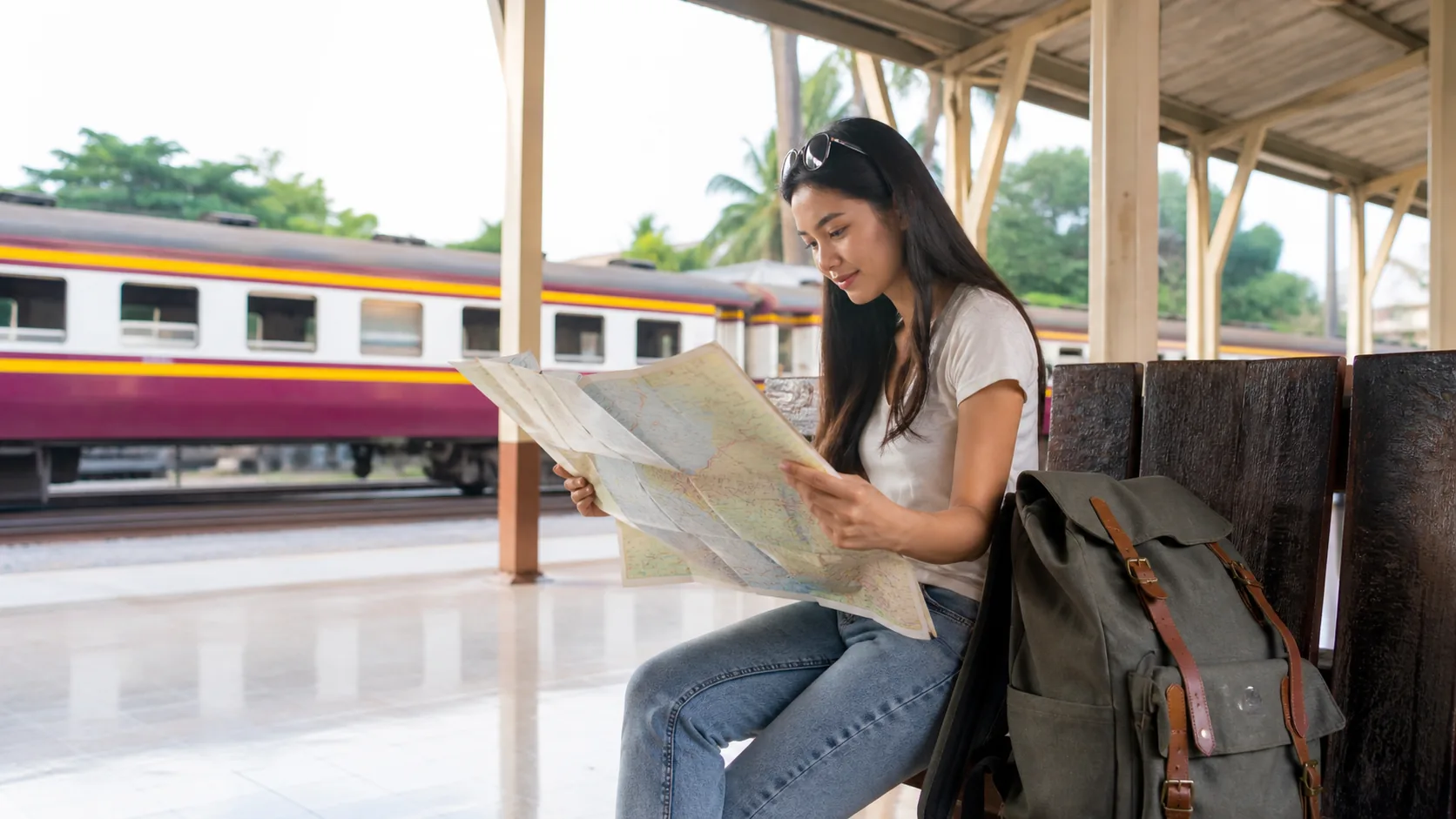
Solo travel in Thailand is easier when the route is simple, arrival plans are decided in advance, and someone outside the trip can see the important details. Independence does not require improvising every transfer. A small amount of preparation leaves more room to make choices confidently after arrival.
Make the first arrival predictable
Record the accommodation address, check-in details, and chosen airport transfer before departure. The Suvarnabhumi Airport — Transportation page lists current official options for Bangkok arrivals. The Suvarnabhumi arrival guide puts immigration, luggage, money, connectivity, and the city transfer in a useful order.
Keep the first evening light. A clear route to a confirmed hotel is more valuable than proving you can solve every decision while tired.
Choose bases that reduce unnecessary friction
A well-connected hotel area can make solo days easier by reducing long returns and complicated late transfers. Compare neighborhoods by the activities you want, not only by room price. Use multi-night bases and day trips instead of changing accommodation for every nearby destination.
Share the core itinerary and accommodation details with a trusted person. If plans change, update the shared information rather than allowing the route to disappear into separate booking messages.
Use transport with a verification habit
Check the vehicle, route, pickup point, and destination before leaving. For ride-hailing, confirm the plate and driver details shown in the app; the Grab in Thailand guide explains where the app helps and where pickup points still require attention.
Avoid making a late arrival depend on several untested local connections. Direct transport may be the more practical first choice when carrying luggage or arriving after dark.
Keep personal safety decisions practical
Protect documents, money, phone access, and the ability to return to the hotel. Moderate alcohol, avoid accepting an unfamiliar transport arrangement under pressure, and leave any situation that feels wrong. The Thailand travel safety guide covers everyday preparation without suggesting that any destination is risk-free.
Save the relevant numbers from Tourism Authority of Thailand — Useful Calls and keep essential information available offline.
Let weather change the day, not the whole trip
Review broad conditions through Tourism Authority of Thailand — Weather, then check the chosen region close to travel. Keep an indoor or lower-effort alternative and avoid isolated weather-sensitive connections with no backup.
Solo travel works best when important decisions are deliberate and ordinary days remain flexible. A clear arrival, a manageable route, and reliable check-in habits create more freedom than an itinerary built around constant improvisation.