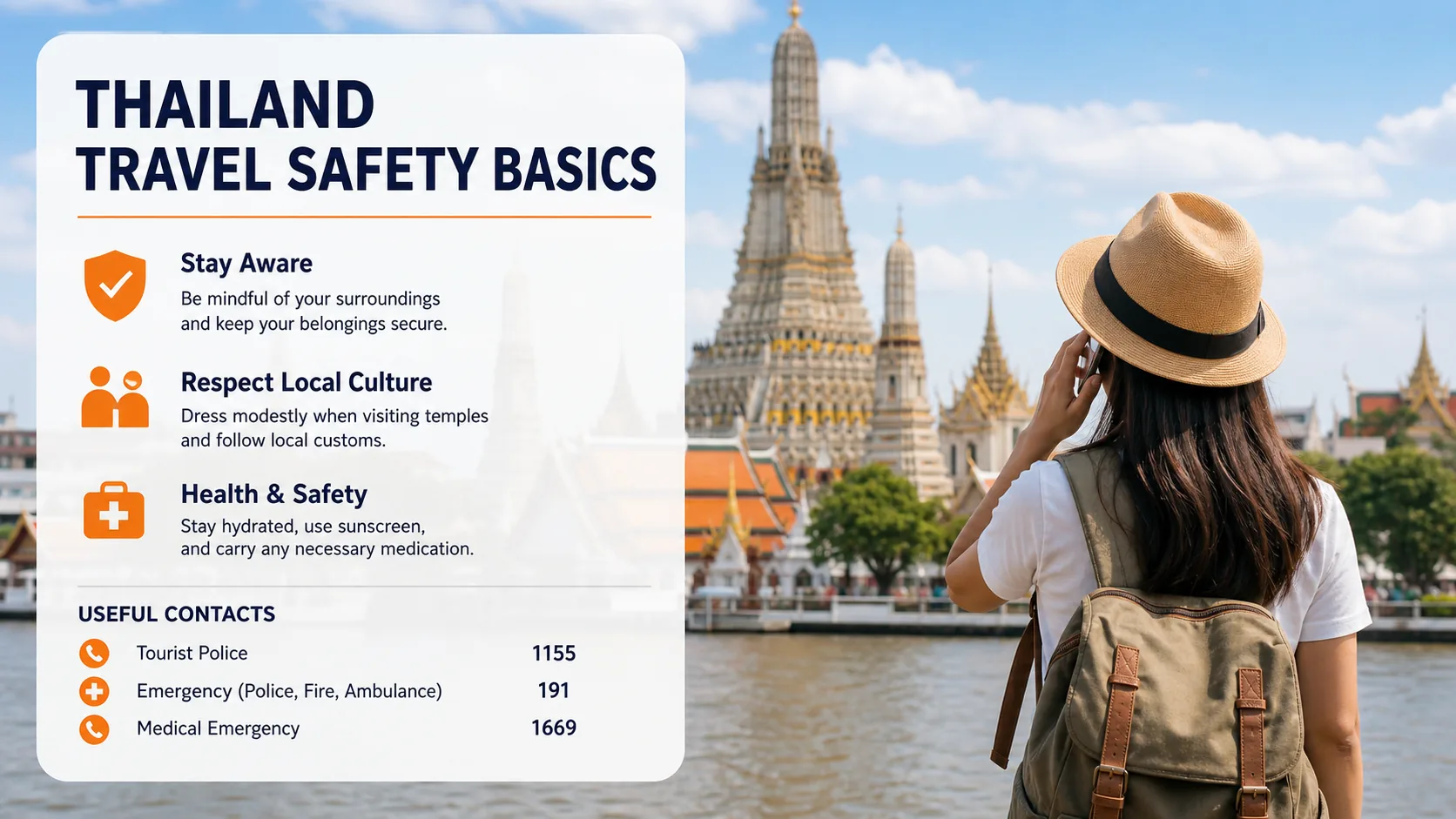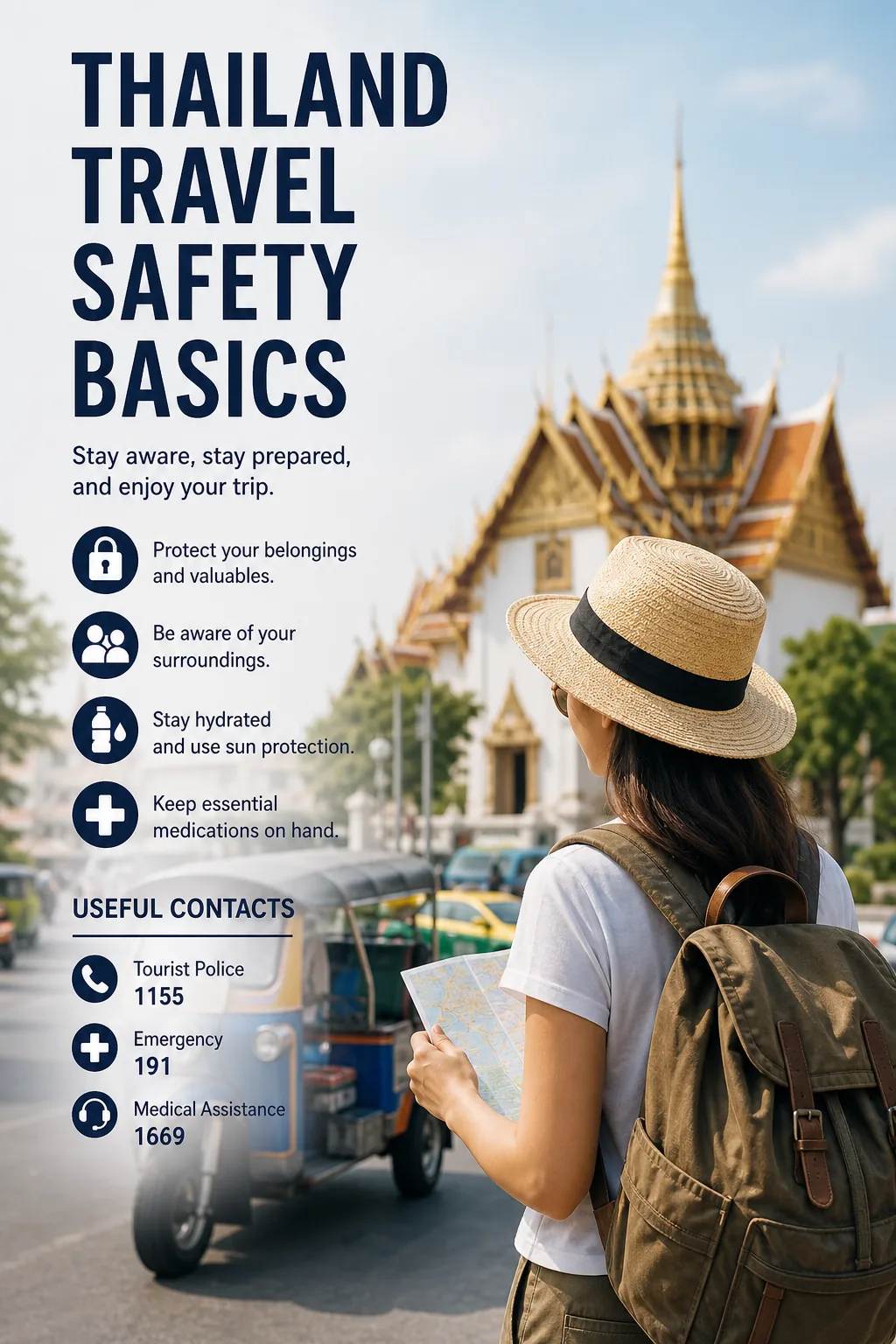
Practical travel safety usually begins with ordinary preparation: sensible transport choices, backups of essential documents, awareness of heat and weather, and current emergency contacts. This guide is not a promise that problems will not occur. It is a framework for reducing avoidable pressure and knowing where to verify changing information.
Prepare documents and contacts before departure
Keep secure copies of the documents and policy details needed for the trip, separate from the originals. Record the contacts for your insurer, accommodation, airline, and any transport booked in advance. Review the Thailand travel insurance guide so the policy is understood before it is needed.
Use the Tourism Authority of Thailand — Useful Calls page for current official contact information rather than copying numbers from an undated post. Save the relevant details somewhere available without a live connection.
Make conservative transport decisions
Use official airport transport and registered options, particularly when tired, carrying luggage, or arriving at night. Confirm the destination before starting and avoid turning a late arrival into an improvised sequence of unfamiliar transfers. Confidence is not the same as local knowledge.
For ferries and island routes, weather, pier location, and onward transport belong to the same safety decision. The southern Thailand ferry guide explains why a connection needs margin rather than a best-case timetable.
Adjust the day for heat and weather
Heat, storms, and rough seas can change what is sensible on a given day. Review the Tourism Authority of Thailand — Weather page for broad context, then check local conditions close to the activity. If air quality matters, use a separate current local reading. Move or cancel an outdoor plan when conditions undermine the original assumptions.
Use current government advice for changing risks
Entry rules, regional advisories, health information, and security conditions can change. Travelers who use U.S. government guidance can consult the U.S. Department of State — Thailand Travel Information page; travelers of other nationalities should also check the advice issued by their own government.
Do not treat an advisory as a substitute for local judgment or an insurance policy. Read its scope, date, and regional detail, then apply it to the actual route.
Know what to do when the plan stops working
When transport, weather, or health changes the day, simplify first. Contact the relevant provider, keep essential documents available, and avoid making several rushed decisions at once. The Thailand entry requirements guide can help keep arrival documents separate from the rest of the itinerary. A prepared traveler is not risk-free, but is better placed to pause, verify, and choose the next safe step.