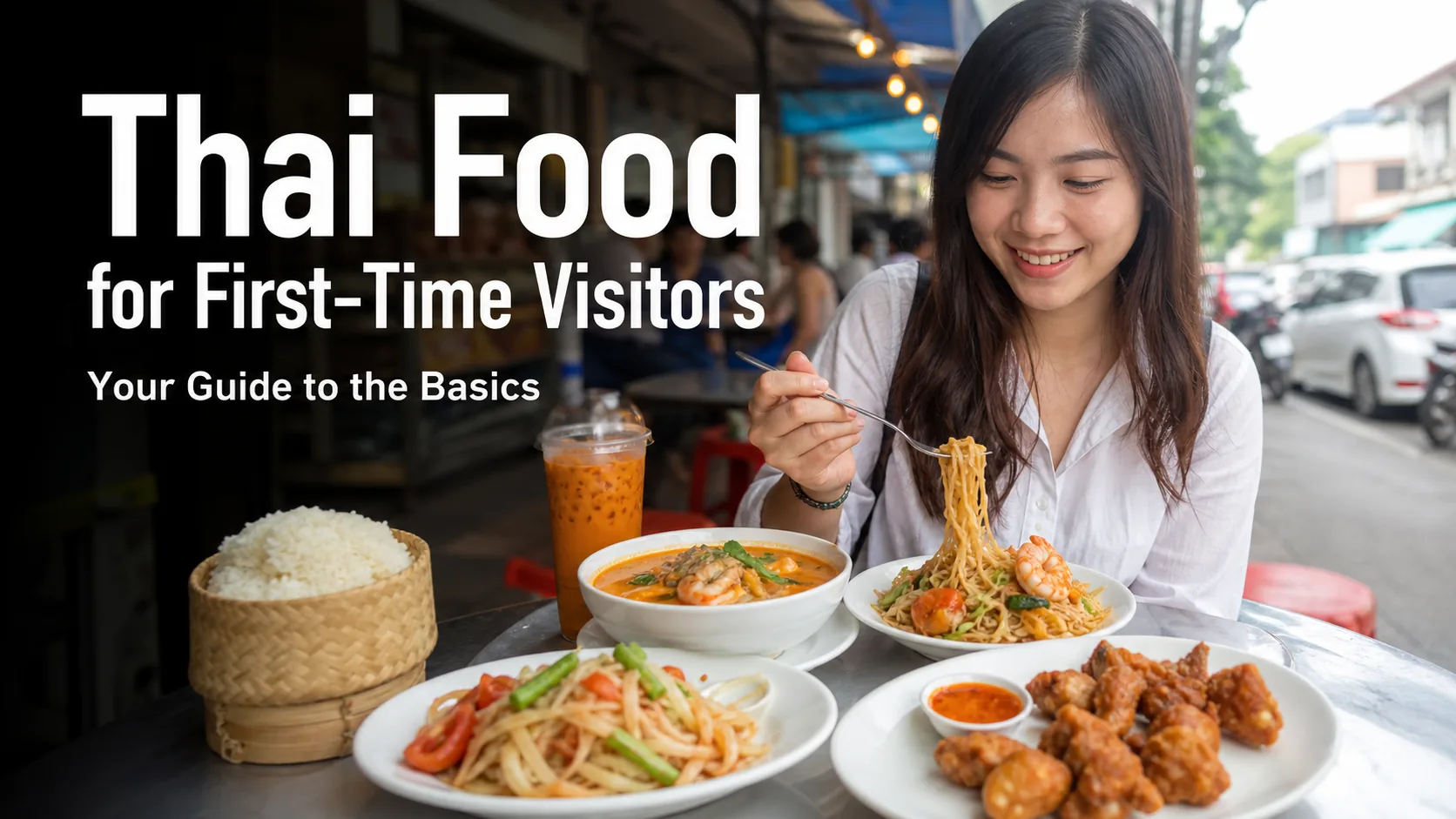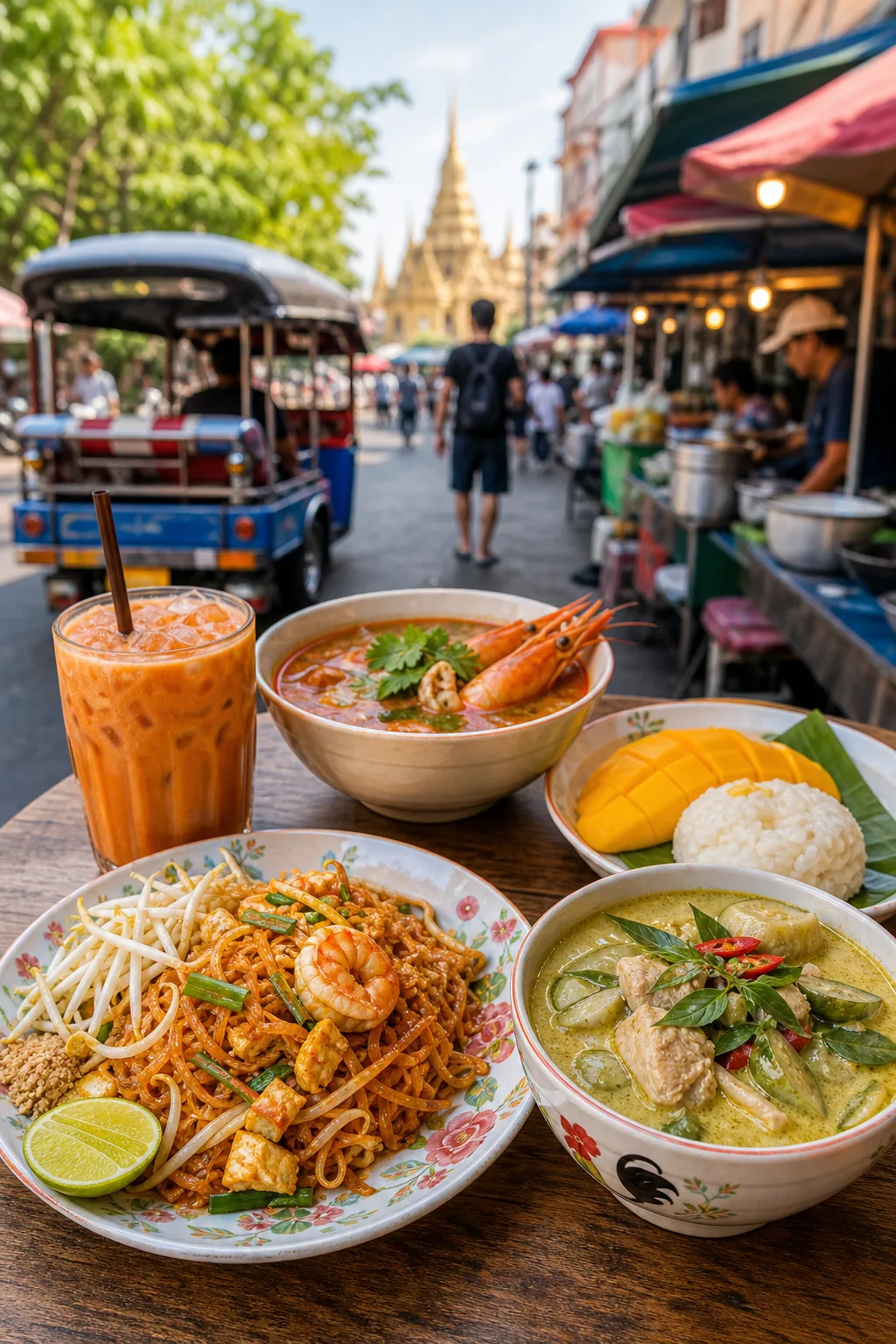
A first Thai meal is easier when you choose one or two concrete options, state your preferences, and keep the first order small enough to adjust. A dish name does not fix its recipe, heat level, ingredients, or portion size: check the menu and ask the person serving you. This is an ordering plan, not a promise about every stall or restaurant.
Begin with a dish and a simple question
For a first order, you might point to pad thai on a menu or choose a rice dish such as khao pad (fried rice), then ask what that particular kitchen puts in it. The Tourism Authority of Thailand's food guide shows how even a familiar dish such as pad thai can have a local version; do not infer one standard recipe from the name.
If you want less heat, try the direct phrase "Please make it mild, if possible" or "Not spicy, please." Show the dish or use a translated phrase on your phone if English is not understood. Ask again before ordering if heat matters; chili may be part of a sauce or served separately, and the kitchen may not be able to change every dish.
Make ingredient needs explicit
For an allergy or dietary restriction, name the ingredient rather than relying on a broad label. A usable question is "Does this dish contain peanuts, shrimp, or fish sauce?" Replace that list with the ingredient that matters to you and show a written translation if needed. Do not assume a verbal reply or an altered order removes cross-contact risk; if the answer is unclear, choose another dish or venue.
At a table, agree on what will be shared before ordering and check portion sizes before adding more. If you are eating alone, one dish and a drink can be a complete first stop; you do not need to recreate a multi-dish food tour.
Ask about drinking water and ice
For water or ice, ask what is provided rather than relying on a blanket rule about Thai restaurants. If you prefer sealed bottled water, request it; if you are unsure how ice is handled, ask the venue or choose a drink without ice. These choices depend on the venue and your own health needs, not on a guarantee from this guide.
If you have a medical vulnerability or become unwell, seek appropriate professional advice. Food preferences and food-safety concerns are different questions; a restaurant review cannot verify either one for your visit.
Let the day's route choose the food stop
Pick a nearby market or restaurant that fits the day's area and the group's comfort. The Bangkok first-timer guide and Chiang Mai guide help keep meals near the rest of a city day. Markets can be useful for browsing and small tastes; a seated restaurant may make questions and a slower meal easier. Neither format is automatically more authentic.
Keep the next meal flexible
After one meal, note what you liked, what you could not communicate, and whether the serving size worked. Use that information to choose the next dish or setting. If food concerns become a health or safety issue, do not substitute this article for care; the Thailand travel safety guide covers broader preparation. A good first food plan is a clear first order, a preference the kitchen can understand, and permission to change course.